1.7 Stalls
For a live overview of my flight lessons, visit: https://flighttools.justinverstijnen.nl/flightlessontracker
This page can contain a collection of personal notes, steps to remember, finished and unfinished content. Please excuse brevity.
Do not use specific information given like fuel flow, landing/take-off distances for your flights. Always refer to the POH of your exact plane for flight preparation. My information is just for references that I used.
Introduction
| Lesson number | Lesson name | Lesson date(s) |
|---|---|---|
| 1.7 | Stalls | 03-11-2025, 30-01-2026, 27-03-2026, 03-04-2026 and 17-04-2026 |
This page contains all my notes for the 1.7 Stalls lesson. This was a very hard lesson because of the weather situations in late 2025. The lesson was cancelled for about 5 times, and 2 times we were already in the air but the weather was worse than forecasted.
For the stalls lesson we needed the following weather parameters:
Flying on 3000ft to have enough altitude (potential energy) to recover from a stall.
As we are flying VFR, we need to be at least 1000ft under the cloud base
No significant weather
10km visibility
Wind at most 15 knots
This means I have done this lesson about 5 times, where only the last 3 were really valid as stalls lessons. I had to do two lessons because of the time shortage we had on the first valid lesson and the several attempts.
03-11-2025
Today we had the lesson scheduled in the afternoon. As the clock was going back from UTC+2 to UTC+1 due to daylight savings, we have dark at an earlier time than before. We also had around 14 knots of wind which was completely crosswind to the runway.
We started doing the Stalls briefing and theory of a stall. Then we continued checking the aircraft and doing the rest of the preparations. Then we took off, but quickly realized that the flight will be ended soon due to the weather and visibility, as we were not able to climb to 2500ft.
After around 25 minutes after taking off, we landed and scheduled a new flight.
30-01-2026
Today it was my first flight lesson in 3 months after around 4 cancellations. In the mean while, i’ve been very busy succeeding in the following items:
Radio Telephony rating
Navigation PPL theory exam
Communication PPL theory exam
The weather was our bottleneck, once again today. It was a cool and cold winter day with snow from earlier this week. This gave us beautiful winter sights from the plane. At around 2000ft (600 meters) after take-off we decided to not do the exercises today because of the cloud front coming to our way. This gave us a great and nice airliner-like view of flying above the coming cloud layer. We have descended and then headed back to our base for a butter landing by my instructor.
27-03-2026
Finally after some cancelled lessons and a vacation, we were finally able to do a lesson again. The weather was great with a layer of stratiform clouds at around 9700ft.
We reviewed the theory about stalls and the briefings done before executing the exercise. Then we prepared the flight reviewing the NOTAMs, aircraft and potential risks, and taxied to the fuel station where we filled up the aircraft.
We did the exercises and this went better as we proceeded doing more stalls. At first, I was too gentle at pulling back and also by recovering the stall. After around 4 times, I did this prociently according to the instructor. Some area’s where I can improve is getting the aircraft into a full stall, as this is very counter-intuative, pulling even more on the yoke when all alarms and bells go off.
We did these 2 exercises:
Stall recovery in clean (flapless) configuration
Stall recovery in approach configuration (20 degrees of flaps)
I learned that stalls can happen at anytime, when not having full focus or flying in circuits so a fast and adequate recovery action is needed to save yourself and passengers.
03-04-2026
Today we had the second full stalls lesson with somewhat less good weather than last week but still proficient to do our lesson. As we only did 2 of the 3 stall exercises, I needed to do another lesson which was good.
We had good weather, once again a little crosswind of around 8 knots and a cloud base on 7900ft of stratiform clouds. In all words, good weather for a nice flight.
We did 3 exercises this lesson:
Stall recovery in clean (flapless) configuration
Stall recovery in approach configuration (20 degrees of flaps)
Stall recovery in landing configuration (30 degrees of flaps)
Recovering stalls went a bit better than the lesson before, but I needed to remind some things that must be done better:
The stall can be recovered by only decreasing the angle of attack
Not directly push full throttle, which happens out of reaction
Steer with rudder, and not with ailerons
Better managability of the flaps, flaps go faster up than down in flight
Pushing the yoke is natual when recovering from stalls, so don’t be scared
Overal the lesson went great, the crosswind takeoff was the best so far, doing everything right from the taxi to the leave of the circuit, including crabbing take-off and holding altitude. Its a very strange feeling when taking off and having some crosswind, that your plane points into the wing, while having an other track as your heading.
The objectives for me to do at home for the next lesson are:
Review briefings of the taxi, take-off and exercise
Review exact RT
Overall, great lesson and looking forward to the next one.
17-04-2026
Today we did a reviewing and pre-circuit lesson, covering every aspect I have learned before in one lesson. This to completely prepare for the upcoming circuit lessons, where every aspect is very important as we are much closer to the ground.
Basic ascending and descending
Airwork, maintaining different altitudes and headings
Trimming the aircraft
Every stall exercise
Slow flight
I finally flown some of the circuit, all the way to late final where the controls were transferred to the instructor but there was a lot of progress after this lesson.
This is also the last lesson where we actively did the stalls, and now we are ready for the real work.
Stalls theory
We did some theory about stalls, what they are and how they happen and must be answered. We can have 2 stages of stalls:
Stall approach -> A stall is coming, some symphons are available
Full stall -> The actual stall where you will feel a result, like a wing dip, nose dip or airspeed loss
I will describe both of those further.
Stall Approach Recovery
In the Stall approach, we are close to a stall and are in the phase that the full stall can be avoided by taking action. In this situation, we can identify a stall approach by looking for these symthoms:
Stall warning beep (around 5kts before the actual stall)
Buffet, this means that the aircraft shakes a bit due to the disrupted airflow on the wings
Airspeed indicator, the end of the green arc, or white arc if flaps are deployed
When having these symtoms, immediately do the following actions:
Release yoke back pressure and some forward pressure to end the stall and unload the wings
Full throttle power
Disable the carb heat to have the highest engine RPM
Level the plane
Remember to never use the ailerons when recovering from stalls as this changes the angle of attack of the wings even further, increasing your stall and decreasing change of recovery.
Then we do some checks from bottom to up to the left to double check if we doing things right:
Fuel Selector (both unless instructed otherwise)
Mixture rich
Throttle
Carberateur heat
Ignition
Magnetos
Engine instruments (Oil temperature, pressure, cylinder head temperature (CHT) and/or exhaust gas temperature (EGT), ammeter and suction/vacuum)
And complete the exercise with some outside checks (APOS):
Altitude
Position
Orientation
Sky 180 scan for traffic/weather
Full stall recovery
In the full stall, we are stalling and one of these three things are happening:
Nose drop
Wing dip (always one of the 2)
Altitude loss
When having these symtoms, immediately do the following actions:
Release yoke back pressure and maybe some forward pressure to end the stall
Full throttle power
Disable the carb heat to have the highest engine RPM
Level the plane
Remember to never use the ailerons when recovering from stalls as this changes the angle of attack of the wings even further.
Then we do some checks from bottom to up to the left to double check if we doing things right:
Fuel Selector (both unless instructed otherwise)
Mixture rich
Throttle
Carberateur heat
Ignition
Magnetos
Engine instruments (Oil temperature, pressure, cylinder head temperature (CHT) and/or exhaust gas temperature (EGT), ammeter and suction/vacuum)
And complete the exercise with some outside checks (APOS):
Altitude
Position
Orientation
Sky 180 scan for traffic/weather
One thing to add, if doing stalls in landing configuration, we need to simultaneously decrease the flaps to also decrease the drag, which means more engine power resulting in more speed. You must at least decrease the flaps to 20 degrees to gain power. Full power on flaps 30 or 40 has so much drag that the engine almost cannot compensate for it.
Homework Altitude vs. Distance
Because of the bad weather in the winter weeks and no chance to do the stalls lesson, I was asked to do some homework. This consisted of these questions to get a better understanding of power, pitch, speed, flaps and range.
1. Flaps and Flapless at take-off
In the first question, I was asked to draw a graphic of what happens with the altitude and distance at the start of the take-off till rotation and somewhat after that.
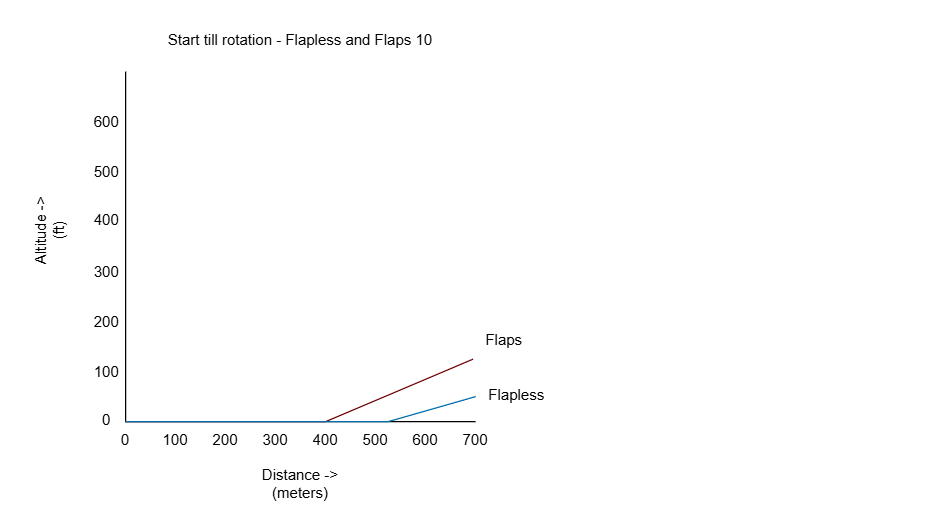
In this graphic, I drew 2 lines, one for flaps 10 and one for flapless. As we have less lift without flaps, we will need a longer runway and therefore climbing later than with flaps extended. Both at a speed of around 65 kts.
2. Flaps 10 and Flaps 30 at take-off
The second question was about answering what would perform better at take-off, flaps 10 or 30.
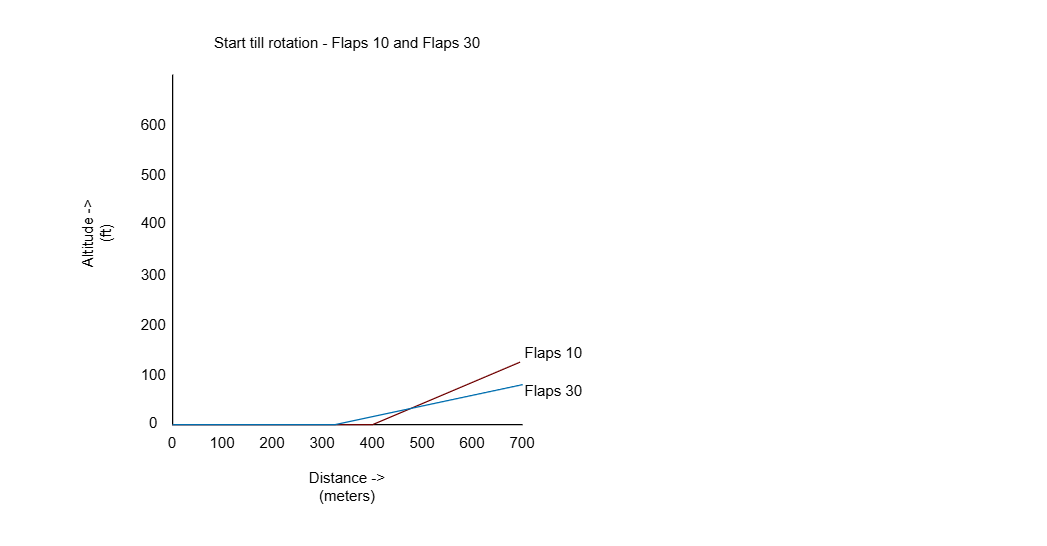
Flaps 10 is in terms the most efficient take-off flap setting, as this is a nice combination of lift and drag. Flaps 30 has an earlier lift-off point of the ground but at the cost of a low speed as result of the enormous drag it creates. We only use Flaps 30 in case of a short field take-off or needing to avoind objects at the end of a (short) runway.
3. Zero wind and 15 knots headwind
In the third question, I have to display the difference of a headwind. I chose an headwind of 15 knots, as this displays a nice difference and its a moderate wind speed for a better lift off.
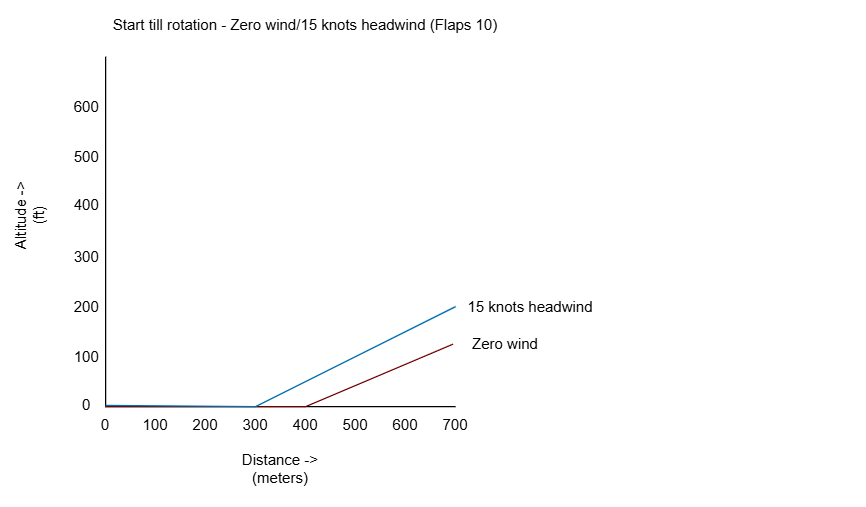
As you can see, with 15 knots headwind, we will lift of earlier because of the extra 15 knots true airspeed. The horizontal flow of air is already 15 knots, so our plane could lift of at about 40-45 knots instead of the normal 55-60 knots.
4. 65 knots vs. 75 knots
In the 4th question I was asked to draw the difference of 65 knots and 75 knots.
For the Cessna 172, these are exactly these values:
Vx: Best climb speed for short distance -> 65 knots
Vy: Best climb speed for short time -> 75 knots
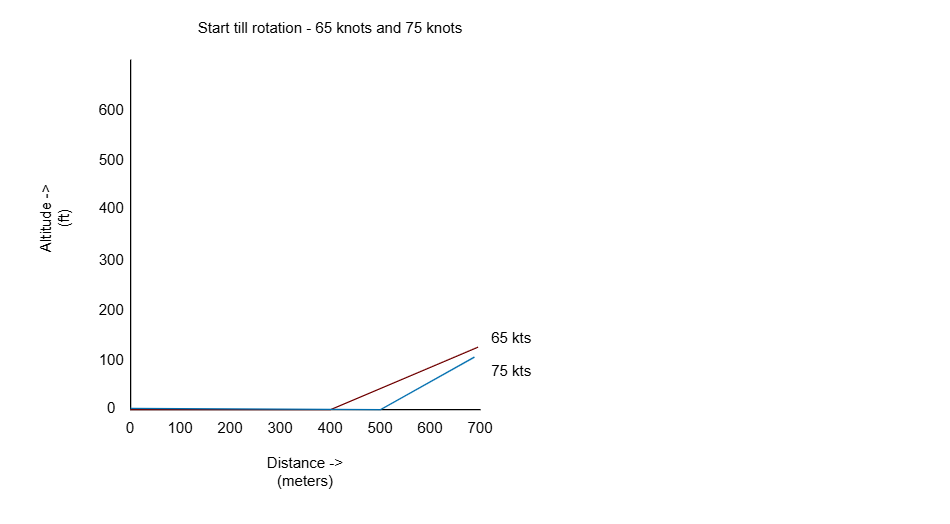
So I drew this graphic where you see that to clear a certain distance, 65 knots is a better speed but when you take time, 75 knots is a better speed.
5. Descending with and without flaps
In the fifth question, we switch to the descending process. Here I was asked to draw the difference between descending with 1700 RPM and 95 knots with a speed of -500fpm vertical.
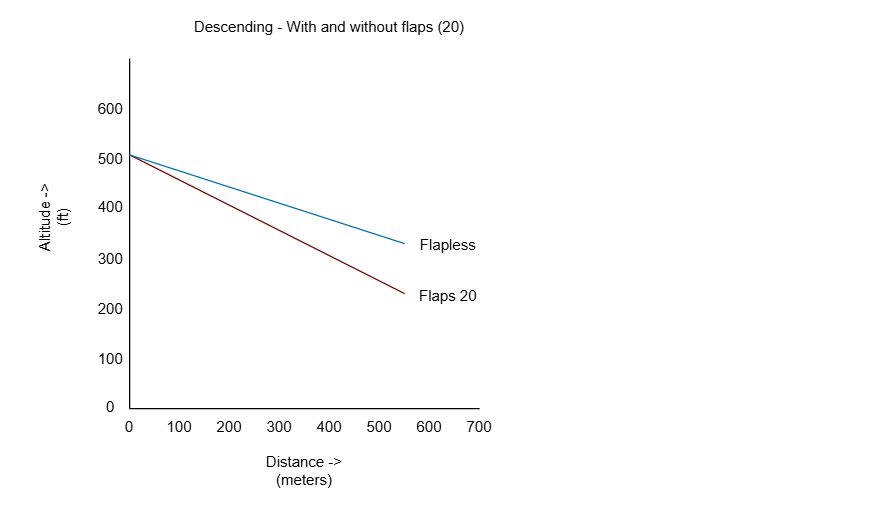
As Flaps increase or drag and lift and decreases our speed, we are able to descend faster in the same period of time.
6. Descending with and without headwind
The 6th question was about the descending distance. Here we talk about horizontal distance we clear during descending.
As we want to descend, and we have 15 kts headwind, we are able to descend steeper. In the same time, we are descended further while flying less horizontal distance. This means a faster and steeper descent.
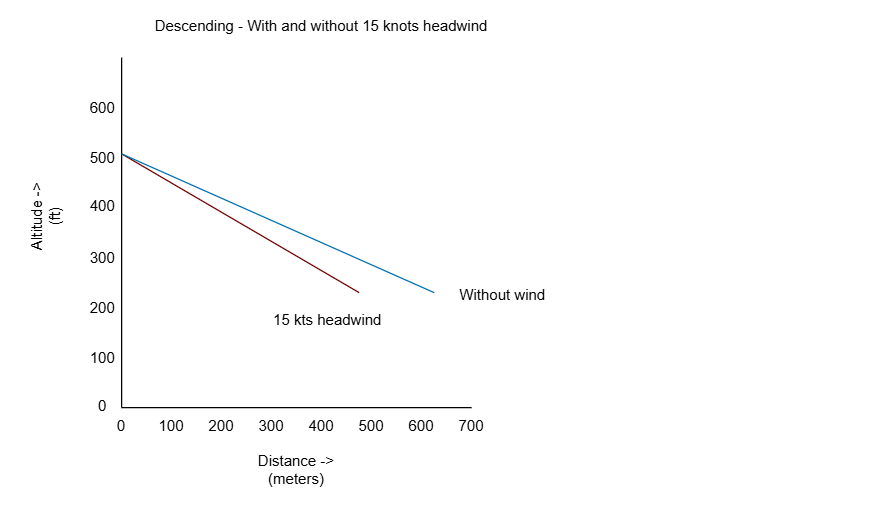
This is a result of the headwind decreasing our ground speed.
7. Descending - 1700RPM and 1500RPM
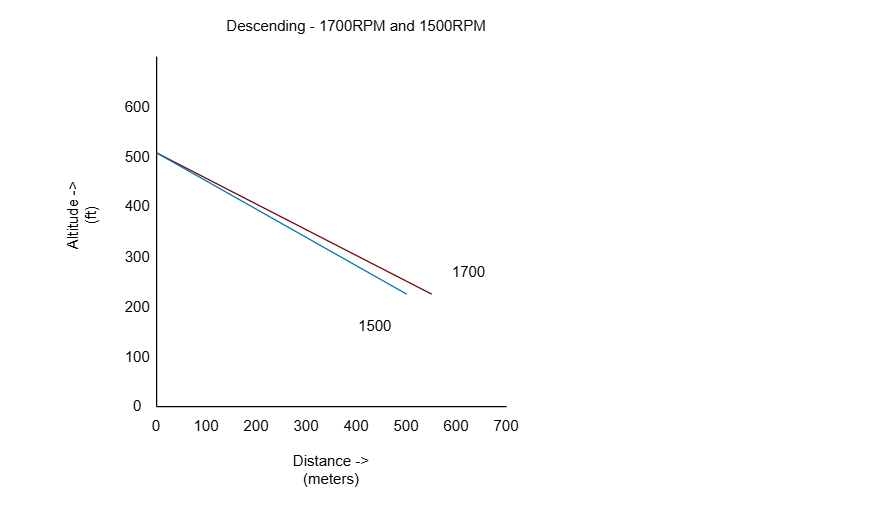
When descending with 1500RPM and 1700RPM, we have a little difference in terms of power. We have less forward trust, so somewhat more drag and a lower ground speed. This makes it possible to descend a bit faster relative to the ground distance.
8. Descending - Power Idle to touchdown
When descending with 3 different speeds, some strange will happen without knowing the theory behind it.
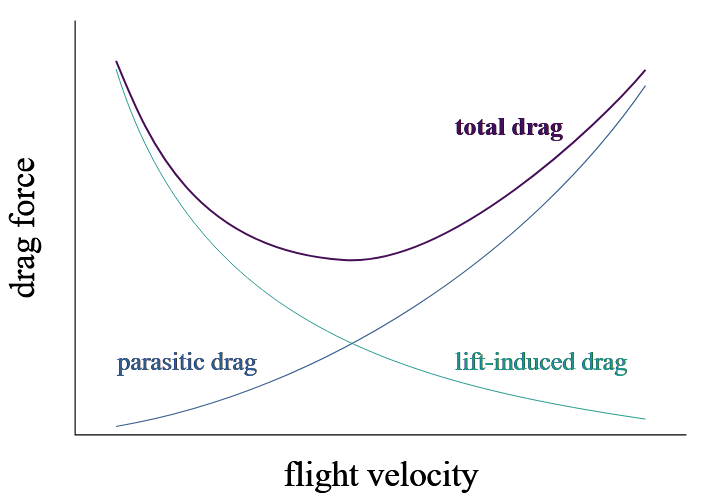
50 knots: You will descend steeply as you fly at the edge of a stall, this makes you descend fast relative to the ground and you have lots of parasite drag
65 knots: this is the best glide speed of the Cessna 172 and gives you the best distance to altitude ratio, and in this graphic so the furthest distance. You are perfectly in the middle of parasite drag and induced drag at this speed
75 knots: this is faster than best glide speed and makes you descend too fast, too much induced drag
9. Descending - Best glide speed heavy and light aircraft
In a cessna 172, the default best glide speed is around 65 knots. However, if we increase the weight of the aircraft, we have to also increase the lift to compensate for the extra weight. To create this more lift we need a little more speed. Heavier aircraft means you need a higher best-glide speed.
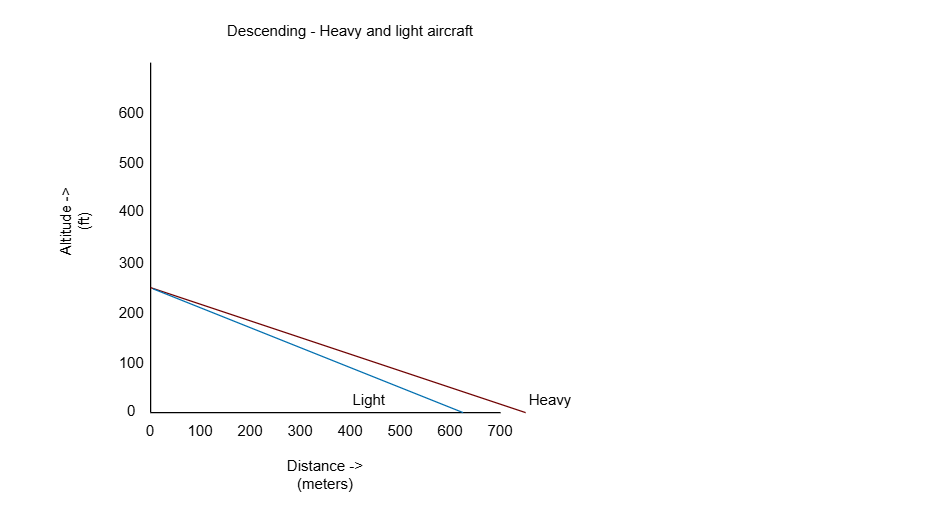
However, a higher speed relative to the ground means that we need more horizontal distance than flying in a light aircraft, so you need to descend earlier.
10. Final to touchdown and roll-out - Flapless, 10 and 30
Descending with flaps, especially to touchdown is much easier, as the more degrees of flaps we have, the less ground speed and so more time to point the plane correctly at the runway. If we have a flapless configuration, we need to maintain a very slow speed resulting in a very high pitch attitude. FLaps help us descending more easily and to see the runway much better.
This is the reason we will be completely finished earlier on the runway, braking away our kinetic energy.
11. Final to touchdown and roll-out - Zero and 10 knots headwind
Headwind also decreases our groundspeed, having less speed relative to the ground. This gives us more time to point the plane at the runway and we need to lose less kinetic energy. With headwind, we will be standing still somewhat earlier.
End of the page 🎉
You have reached the end of the page. You can navigate through other blog posts as well, share this post on X, LinkedIn and Reddit or return to the blog posts collection page. Thank you for visiting this post.
Support the blog
