PPL Theory - Aircraft General Knowledge (AGK)
Categories:
This page contains all notes of the Aircraft Genreral Knowledge course.
The airframe (14)
The frame of a plane
- Monocoque: A construction method where the external skin of the aircraft carries almost all of the loads. There is little or no internal framework. It’s lightweight but can be less tolerant to damage, since the skin itself is the main structure.
- Outside supports all forces
- Comparable with a can of coke
- Semi-monocoque: A more common design in modern aircraft. The external skin still carries loads, but it’s reinforced by an internal structure (frames, stringers, bulkheads). This makes the structure stronger, more damage-tolerant, and easier to repair than pure monocoque.
- Inside supports half of the forces and outside half of the forces
- Truss contruction: This method will support all forces on the inside of the plane. Here the outside could be any material, like leather or vinyl.
- Inside supports all of the forces
The wings (14)
We could have two types of wings:
- Cessna 172 has the wings above the cockpit: high-wing (hoogdekker)
- This needs support of the wings which we call: braced wings
- Piper PA-28 tas the wings below the cockpit: low-wing (laagdekker)
- This doesnt need support of the wings which we call: cantilever wing
The piston engine (15)
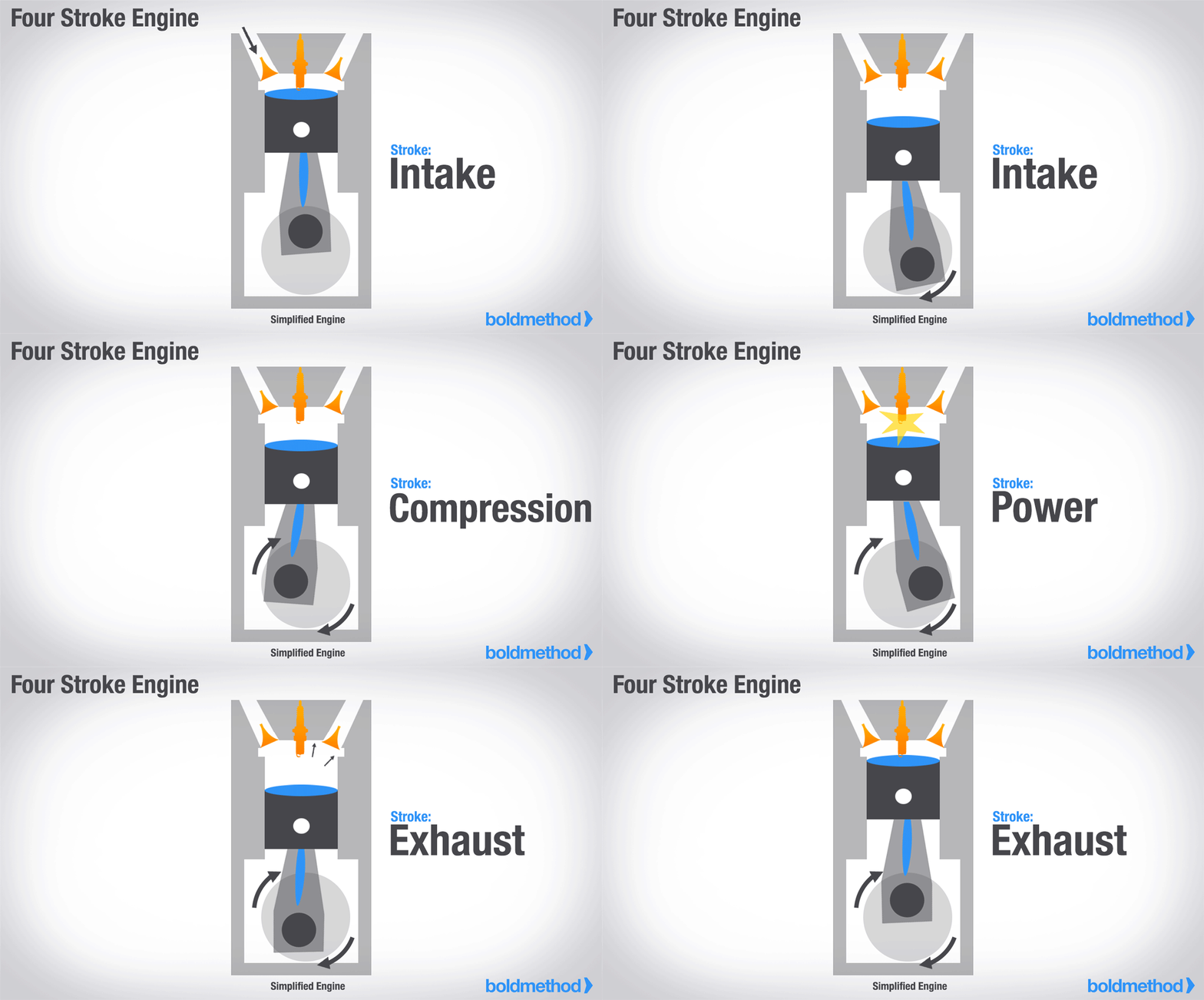
In planes, the most used engine type is a four-stroke (viertakt) gasoline engine. Four strokes means that the engine uses 4 strokes to complete the fuel burn process. The engine is obviously the most important part of getting the propellor to turn.
The engine has the following parts:
- Carberateur: A part of the engine which mixes fuel and air for the correct burn-mix.
- Inlaat: The part where a mix of fuel and air is going into the cilinder
- Inlaatklep: A gate which closes and opens momentarily between the verbrandingsruimte and the Inlaat,
- Uitlaat: The part where the burnt fuel rests are deported out of the engine and is connected to the main exhaust
- Uitlaatklep: A gate which closes and opens momentarily between the verbrandingsruimte and the Uitlaat
- Bougie: The part which makes the mix of air and fuel burn by using electrical sparks
- Nokkenas: This part is connected with gears to the Krukas and decides when the Inlaatklep and Uitlaatklep are being opened and closed. In a four-stroke engine, this happens at half the speed of the Krukas.
- Cilinder: This is a name for the whole burn-part of the cilinder
- Verbrandingsruimte: This is where the actual mix of fuel and air is happening
- Zuigerveren: Attached to the Zuiger and it’s purpose is to isolate the Verbrandingsruimte from the rest of the cilinder
- Zuiger: This is a part which is connected to the Krukas that does the actual motion for the Krukas to be turned.
- Drijfstang: This is the part connected to the Krukas and the Zuiger.
- Krukas: The krukas is a part there all dynamic force of the engine is linked with and at the end of this as, we have the propellor. In a car, here are the wheels connected.
- Carter:
- Krukkast: This is the central part of the engine, and is where the krukas and Nokkenas are located. At the underside of the Krukkast, we have a Carterpan which contains oil and “lagering” for the Krukas
Burning fuel in a 4 stroke engine is completed in 4 phases:
- Inlaatslag (Intake)
- Compressieslag (Compression
- Arbeidsslag (Power)
- Uitlaatslag (Exhaust)
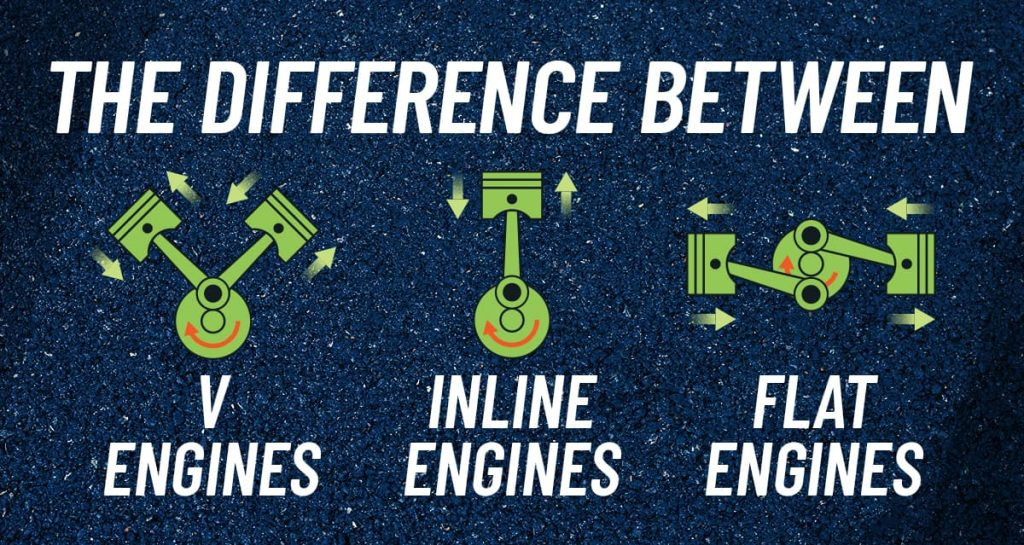
There are multiple types of motorshapes. In planes, the most used shapes are:
- Line engines
- Boxer engines (horizontally exposed)
Engine power is mostly indicated using Revolutions per Minute (RPM). In the cockpit we cannot read the actual power it delivers, only the RPM of the Krukas. The part which the engine powers.
At bigger heights, like from 3000ft, we need to pull somewhat on the mixture handle to reduce the amount of fuel going into the engine. At bigger altitude, the process is more inefficient when putting too much fuel into the engine.
- Manifold pressure: Inlet pressure
- Brake horse power: The power the brakes of the plane can withstand.
The power of a piston engine depends on the air density. This is depending on the pressure, temperature and humidity. At a low air density
Turbo-engines are in 2 types:
- Altitude boosted: This type, the turbo always runs till big altitude to help the engine when horse power decreases
- Ground boosted: This is the most existing type of turbo engine and the turbo always runs to increase engine RPM. This works till the critical altitude.
Verder vanaf 17.
Small break
Pitot-static instruments
The Pitot and the static port are 2 openings on a plane which measures a different type of pressure:
- Pitot: Measures dynamic pressure -> Speed
- Static port: Measures static pressure -> Altitude
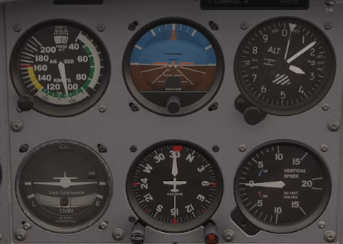
These two components are connected to 3 of the basic 6 instruments we must have in a cockpit:
- Airspeed (Ports/Analogue)
- Artificial horizon (Gyro/Electrical)
- Altitude (Ports/Analogue)
- Turn coordinator (Gyro/Electrical)
- Heading/Compass (Gyro/Electrical)
- Vertical speed (Ports/Analogue)
Static port
The static port is an opening (mostly on the left side) that measures the static air pressure while in the air. The pressure it measures is displayed on your altitude indicator.
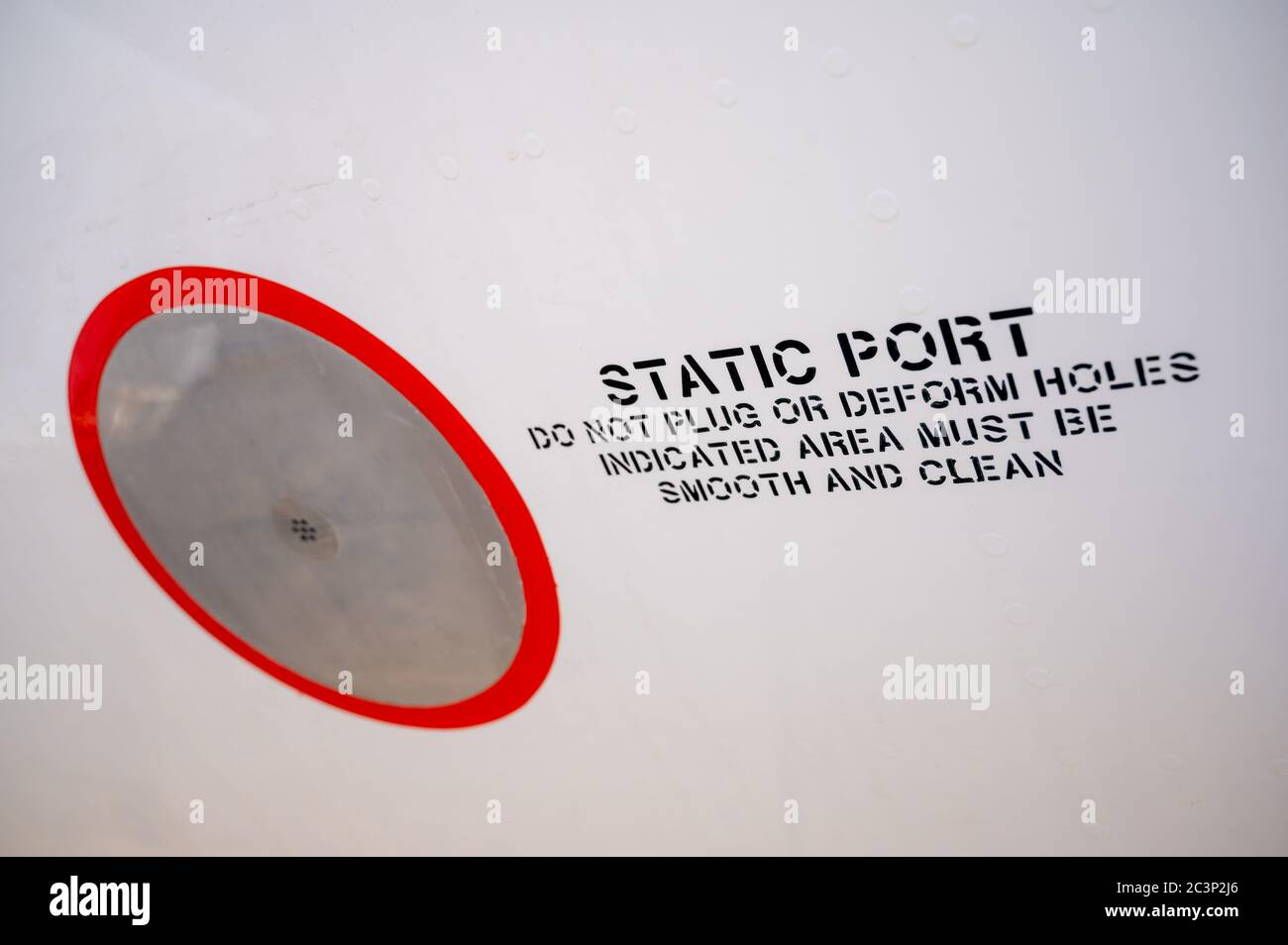
This opening is placed at the opposite direction of incoming air, to truly measure static pressure. In some planes, this is integrated in the pitot-probe.
When having problems with altitude or vertical speed (like in the winter), we have a second option of static air, the alternate static port/alternate air. This takes the air from the cabin, which is mostly at a higher altitude than it is really. (Around 100 feet higer than true altitude).
A third option can be to smash the vertical speed indicator, then this air will flow through the static system. Our vertical speed indicator obviously would not work anymore, but is the least needed instrument against airspeed and altitude.
Pitot probe
The pitot probe measures the dynamic pressure (incoming amount of air) that will be applied to the aircraft during flight. This is mostly the airspeed, the Indicated Airspeed (IAS).
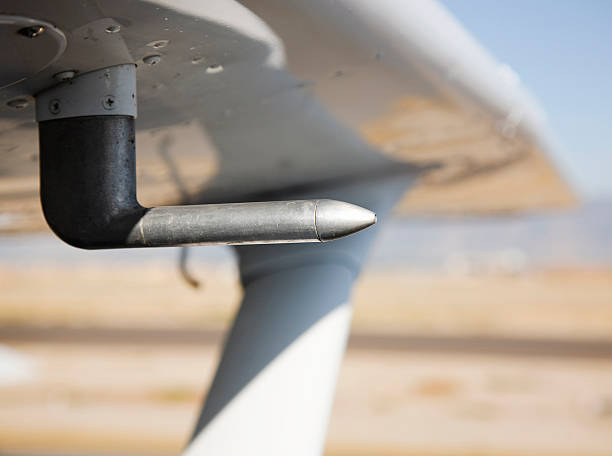
When shutting down the plane, we will place a red cap onto this probe. This is to prevent insects or ice to build up and have a non-working speed indicator in flight.
The airspeed will be measured by both the static port and pitot port. It measures the difference between the dynamic pressure and static pressure which results in a airspeed.
Airspeed IAS, CAS and TAS
Other important notes from the course
- At shutdown, we pull the mixture to clean the engine cilinders. This to reduce the chance of “hot-prop”, turning the propellor can start the engine due to the magneto still powered if key still in the hole
- Flaps is “Vleugelklep” in Dutch
- Braced Wing(with strut) is Cessna 172 type planes
- Cantilever wing is Piper type planes
- Monocoque construction is a can of coke
- Semi monocoque is reinforced in the inside
- Max zero fuel mass: important to calculate balance if fuel is almost up (weight of the plane including passengers and baggage)
- Vertical stabilizer is “Kielvlak” in Dutch
- Horizontal stabilizer is “Stabilo” in Dutch
- Multi-engine airplanes have ruddertrim to compensate for single engine failures
- Lift is the force that pushes you in the air (draagkracht)
- Slats are leading edge flaps -> increases lift
- Flutter is aerodynamic imbalance
- Torsieschaar is torque link and a shimmy damper
- Shimmy is a bike without hands that vibrates
- Shockdamper works with gas and oil
- Gas for damping
- Oil for suspension (vering)
- Hydraulic means “hydro” and means transferring pressure by hydro, for example brakes
- Unhealthy then touched
- Thin and low viscocity
- Crabbing is needed to line up with the wind, at around 15 feet before landing, you turn the right direction to minimize deviating from the track to the runway
- Touchdown load is horizontal and vertical load
- Slipmarker is a red piece of painting that marks the tire and rim to align and makes a slip visible
- Tubeless means a tire without a “tube” (binnenband)
- Tube type: tire with a tube
- De-icing is melting existing ice (revive)
- Anti-ice is preventing ice (prevent)
- Pitot heat/wind shield/carb heat
- Engine fire at starting: cranking to crank the fire into the engine
- Fire types and extinguishers
- A = All that can burn
- All types of extinguishers
- B = “Benzine” or oil
- All types of extinguishers
- C = Gas
- CO2 and Halon
- D = Metals, aluminum or magnesium (D standard metal tuning)
- Halon
- F = Fat
- A = All that can burn
- Krukas connected to propellor and piston as
- Nokkenas connected to krukas turning 50% of the krukas
- Stijgstroom carberateur -> lucht stijgt ,gemonteerd onder de motor
- Turbo charging is compressed air into the engine (turbo)
- Compressed gas into a tighter squeeze produces heat and needs cooling
- Waste gate is a pressure relief gate
- FADEC means automatically controlled mixture
- Vapour lock happens with warm weather and makes the engine go running stutterly
- More throttle means more air, not more fuel -> thats what the mixture is for
- CVV gas uses heat and can produce ice -> Thats why we need to enable it under 2000 RPM. This can happen even when its 28 degrees celsius outside
- Warm air is thinner -> RPM drop
- Nullast sproeier prevents the engine from turning off when idle
- Lean to a RPM drop and then add about 1/2 cm
- Exhaust Gas temperature
- For prop-rpm planes which are called “constant speed propellor planes”
- This means the plane changes the blade pitch to maintain a certain RPM
- Throttle will control the air inlet pressure
- RPM will control the actual RPM of the propellor
- Engines will use fuel as colling, sometimes a little more fuel is needed to cool the engine
- Gasoline
- AVGAS 100 LL is blue
- MOGAS is yellow
- Jet A1 is colorless or black
- Magnetos are the powering system for the spark plugs, they are connected to the krukas and will deliver power as long as the propellor turns. These work indepenmdently from the electrical system of the master switch for redundancy
- If setting the ignition to off, you actually connect the primary coil of the magneto’s to the ground (-)
- A propellor pushes air behind it to get a forward movement (Air is thin water)
- “Luchtschroef”
- If a multi engine plane has one engine failure, they set the propellor to “feather” (vaanstand) to reduce drag of the propellor
- Maximum Angle of attack of the blades and of most planes is around 15 degrees
- PSI is pounds per square inch
- In a cessna 172, these components are connected to the Master switch, and will fail when having power failure:
- Flaps
- Avionics/Navs/Radios
- Transponder
- Lights outside
- Lights inside
- ELT
- Autopilot
- Turn coordinator
- Other flight instruments are based on pressures and gyros. Gyro’s are powered by the vaccuum system
- Magnetic compass is a stupid device and must only be used in straight and level flight
- Turning from north will result in a wrong but then corrected turn
- Turning from south will result in a inverted turn
- When accelerating, this will give an other heading because of the CG of the device
- Alternator is a electrical device that picks the energy of the krukas and stores it in the battery (Alternating current)
- The battery works about 15 minutes without charging (in a failure, spare your juice)
- Ammeter and load meter are the same, but ammeter shows if its actually charging. Load meter only shows the current load on a scale from 0 to 60
- Circuit breakers only prevent overheating
- Airspeed indicator uses static port to compensate static pressure from the dynamic pressure, which assures that the dynamic pressure (and so speed) is correct at every altitude
- Air speed indicator is in real life a pressure meter
- Air molecules meter
- Altitude meter is a barometer which converts a set pressure to altitude (pressure decreases as altitude increases)
- This has a small correction of -20 ft when its cold and +20 ft when its warm weather
- This doesnt work with sensors at the bottom of the airplane, as we ould have a different altitude every nanosecond and as other traffic in the vicinity which we want to avoid
- Vertical speed indicator sucks pressure and has 2 second delay
- It has a button on the back side which sets the meter to “0”
- A gyroscope is rigidity (standvastigheid) and preccession in turns
- The vaccum is the part after the engine which sucks air and provides force to the gyroscopes
- Skidding and slipping turns